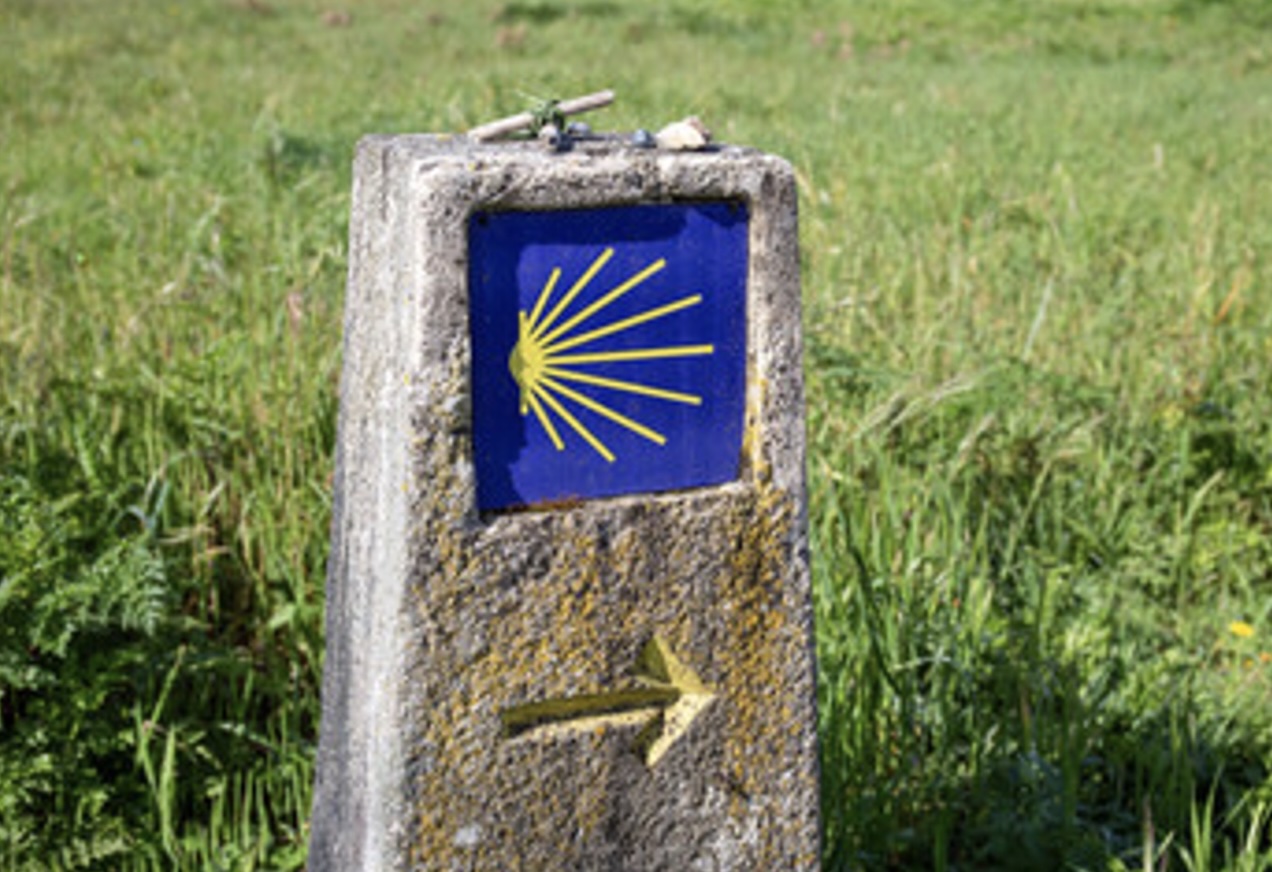
The Camino de Santiago is one of the most ancient and well-worn pilgrimage routes in the Western world. For over a thousand years, people have walked these trails—from all across Europe and beyond—toward the cathedral in Santiago, said to be the resting place of the apostle James.
In today’s hectic world that is constantly bombarding us with chaos, the Camino is a chance to hit pause. Hit pause on social media. Hit pause on politics. Hit pause on life’s demands.
In this session, Penny Ridderbusch will talk about the history of the Camino de Santiago, her experience of walking the Camino, and what pilgrimage can mean for Unitarians.
At its core Christian Nationalism is a political-ideological view that a particular nation either is or should be a Christian nation — meaning the identity, culture, laws or governance of that country should reflect a specific form of Christianity. It is distinct from simply “being Christian” or “Christian values influencing society.” Rather, it tends to assert that Christianity (or a particular interpretation of it) should enjoy a privileged or dominant status in national life, and that political/civic institutions should reflect or enforce it. There are growing concerns that Christian Nationalist ideas weaken democratic institutions by reducing the separation between church and state, or privileging a particular religious-civic identity over pluralism. It also poses challenges for religious freedom and minority rights: when one tradition is privileged in law or policy, other faiths or secular citizens may find themselves marginalized. Some countries heavily impacted by this movement include the United States, Brazil, Poland, Hungary, Kenya and other sub-Saharan nations.
We began this session by watching a short 20-minute educational video (by James Talarico) on the impact of Christian Nationalism and how we might move beyond it. We then reviewed and discussed the implications of Christian Nationalism for affected nations (with a particular focus on the United States) and for liberal religion as a whole.
The October Academy presentation featured guest speaker Mark Reimers.
How do the billions of neurons in your head, tangled together like jello spaghetti, produce feeling, determination, love and laughter? Waking up, deliberation, remembering, effortful thinking, inner conflict, and day-dreaming are all aspects of consciousness. We will discuss how studies of brain activity during these kinds of experience can help clarify these questions. Will humans of the future understand consciousness? What difference could that make to how they live? Will the science of consciousness lead to enlightenment and understanding or to precise effective Machiavellian manipulation?
This December 2025 NAUA Academy session features a presentation and a lively discussion on the opportunities and challenges from the Arising of the Nones. Joyce Francis leads the discussion, presents efforts of the New Salish Sea Congregation and our own stories of finding Unitarian alternatives. Does the same programs and activities of Unitarians still work for the Nones?
Our apologies.
The recording of this Academy session (below) was not started until after Joyce Francis had been introduced and she had begun her presentation.
Ralph Waldo Emerson decried the Unitarianism of his day as “corpse-cold” and urged the religion to evolve with new understandings of the contemporary world. Those understandings are still with us today, but our Living Tradition asks us to continue evolving with the times. Dr. Matthew Shear will share with us a positive view of what a liberal religion for the 21st century could look like.
Dr. Matthew Shear is a 1980 graduate of the New England College of Optometry, and completed a post-graduate program from the Baltimore Academy for Behavioral Optometry in 2002. He has also trained as a peer counselor, eventually teaching the technique to others. His particular interest is in the effects of misperception on our understanding of ourselves and the world, and how that affects our behaviors. This focus eventually led him from clinical practice to becoming a religious professional. He began preaching lay led services in 2007, and in 2018 was engaged by Channing Church in Rockland, MA as their full time Preacher, where he served for two years. A former Board member of UUMUAC, he is still an occasional preacher of their 3rd Wednesday Vesper services and elsewhere.
Discussions about nuclear weapons are often framed as security, legal, political or military issues. Yet equally important are moral and ethical perspectives, and faith communities play a critical role in bringing in such dimensions to discourses about nuclear weapons, which poses existential threats to humanity and our planet. In this talk, Anna Ikeda of Soka Gakkai International will discuss efforts of the people of faith in advancing nuclear disarmament and abolition, both at the United Nations and grassroots levels.